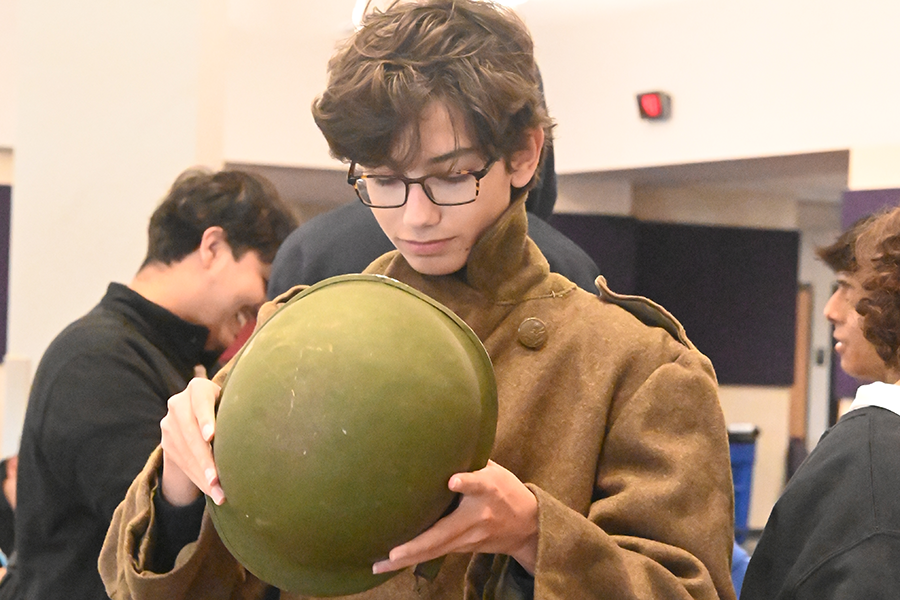
After weeks of learning about World War II in her U.S. History class, junior Jocelyn Guzman got the chance to see real life artifacts from that era in person. As Guzman made her way through the stations, one artifact peaked her interest – the green helmet. Guzman inspected and felt through the textures of the helmet, before eventually trying it on.
“You can only wonder where that artifact has been, who had it, what it was used for,” Guzman said. “It’s kind of interesting to think about that someone used that.”
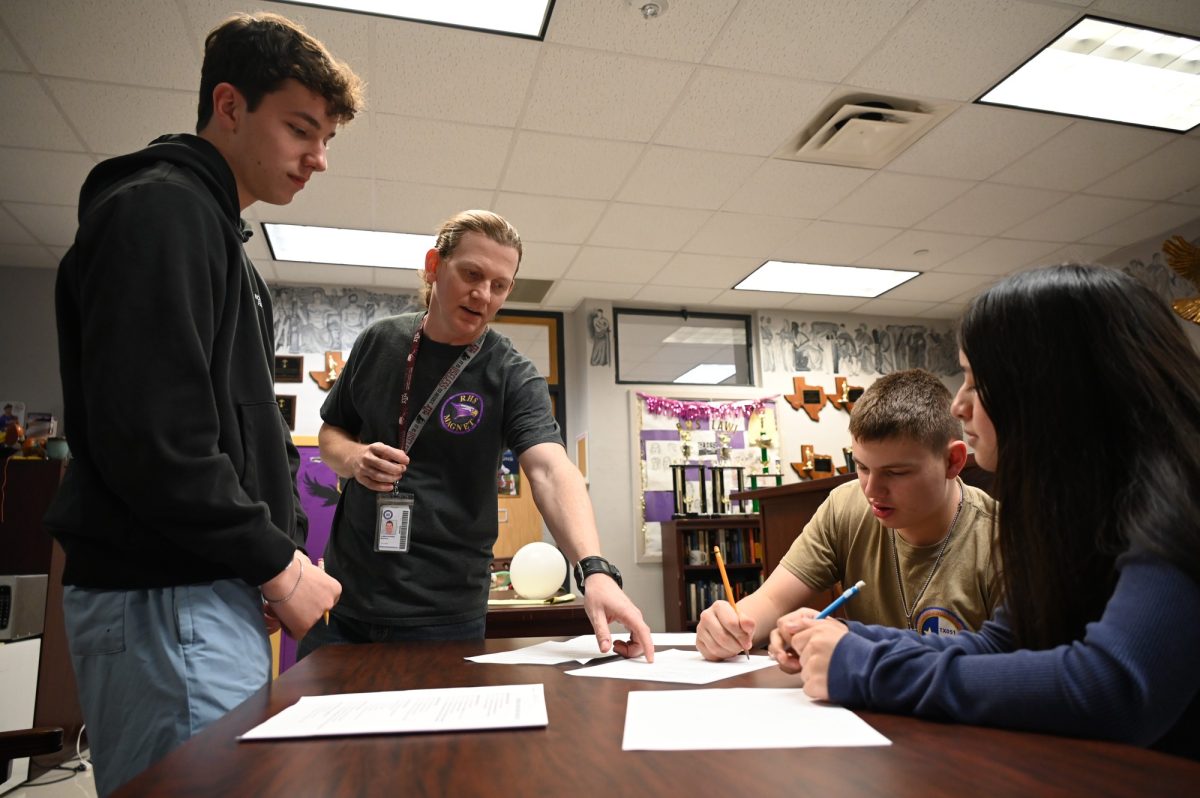
U.S. History teacher Benjamin Prior organized an exhibit displaying his collection of real WWII artifacts for U.S. history students to have a more hands-on learning experience.
The artifacts displayed were donated to Prior for his history class at Pearce High School by the widow of a military veteran who served in Europe during WW2. The artifacts included ration cards, a helmet, a heavy and lightweight jacket as well as posters from the WWII era.
“Initially it was just the helmet, the shovel and the heavy uniform, and since then it’s grown,” Prior said.
Students were able to not only look at the artifacts, but also try them on such as the lightweight jacket and helmet.
“A personal favorite of mine was the was the jacket, but that was because I got to put it on and sort of pose with it,” junior Braden Wolff said. “It was very interesting and cool.”
The students said they felt the weight of what they were learning about and realized it wasn’t just history that was written on books but real life events that affected real people who might still be alive to this day.
“They fought with these, it was like people’s lives depended on this gear and information,” Wolff said. “It puts into perspective. You see it as something that happened a long time ago, but it was only 80 years ago. People are still alive from that time.”
Prior hopes that through making history more hands-on, students will know that learning about the past is more than just memorization.
“It makes history real, and they realize it’s not just memorizing dates, but it’s understanding lessons from the past,” Prior said.