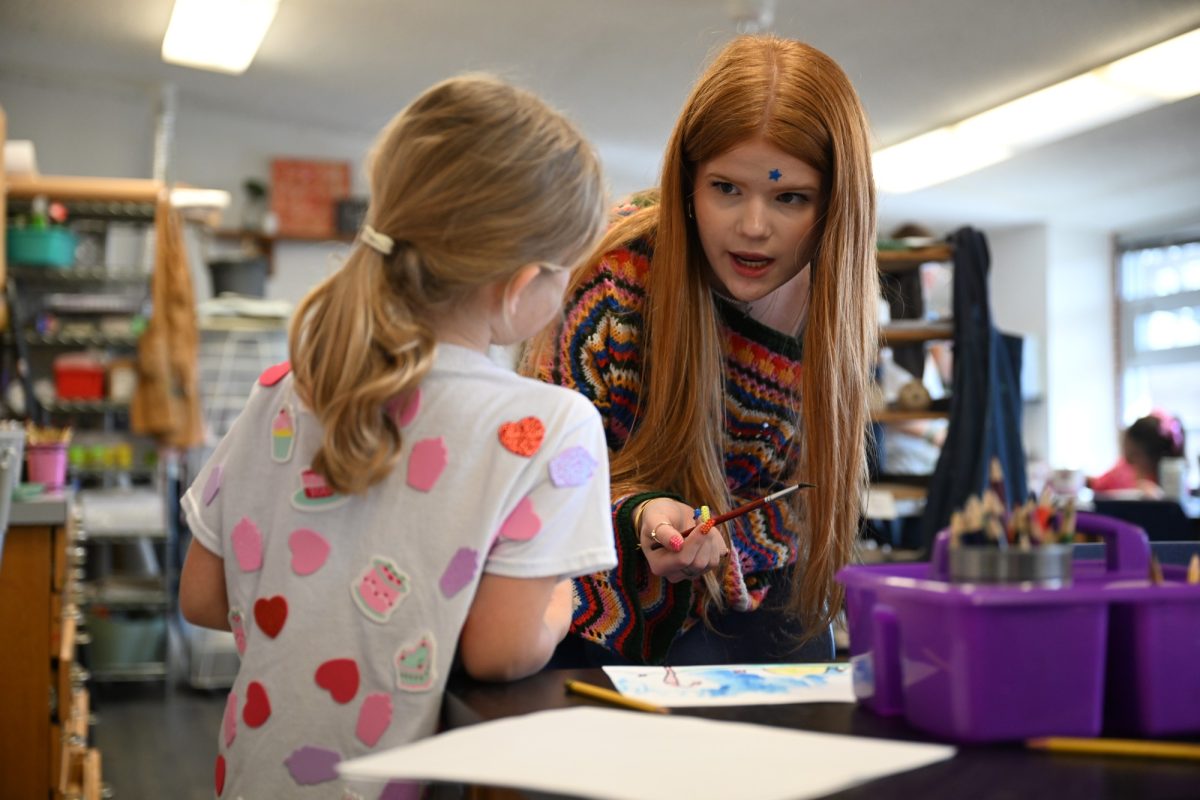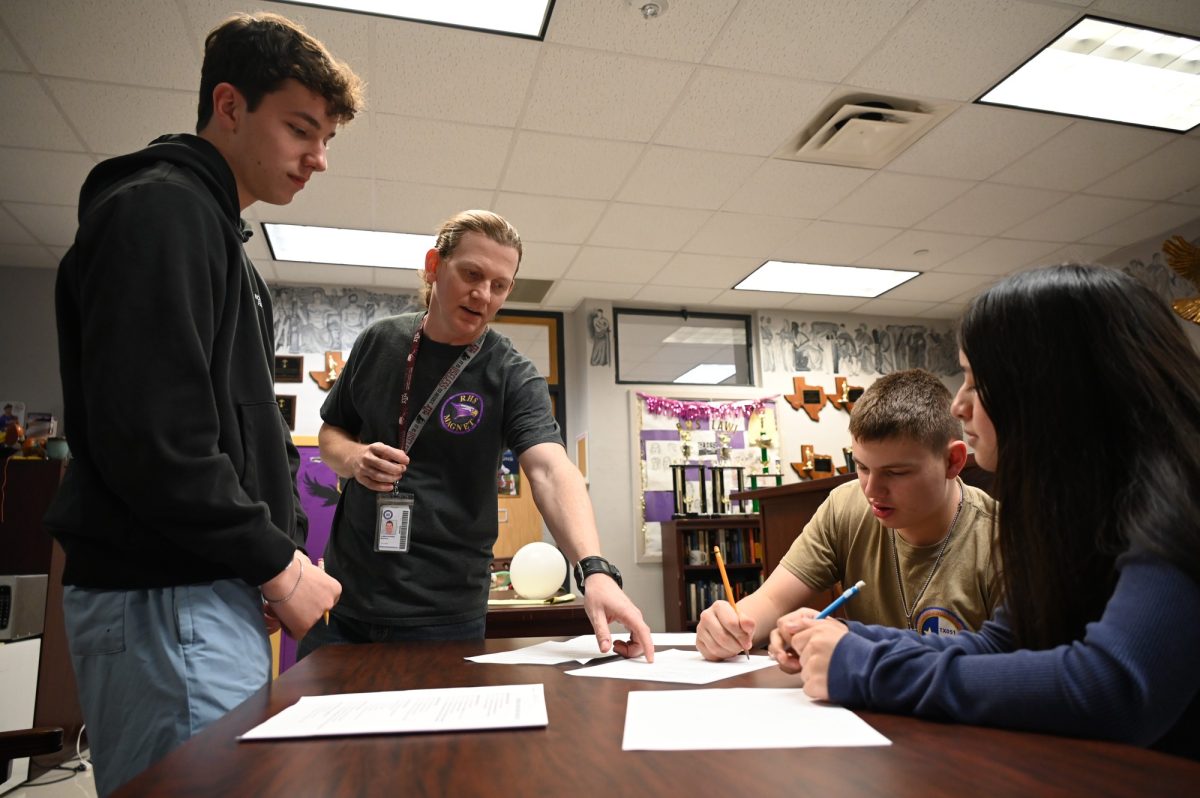
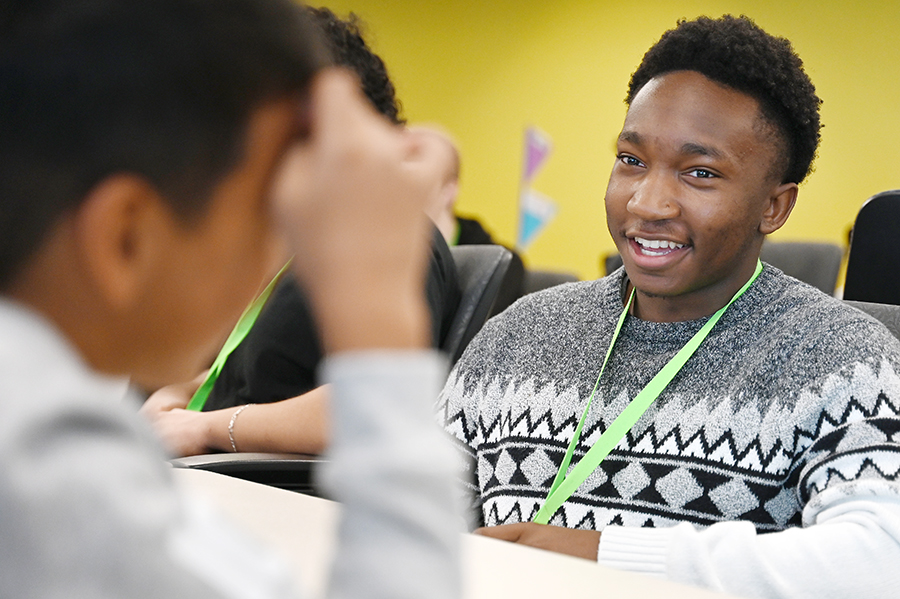
As StateFarm mentors and teachers gathered around to listen to third grader Bennett Deckers story, the crowd erupted into laughter as he talked about characters on a deserted island with black mambas. With the help of Computer Science Magnet student Ike Fallin, Decker was able to create an entertaining story as part of an exercise designed to teach Math Science Technology Magnet Elementary students about story writing.
MST Magnet elementary and RHS Computer Science Magnet students worked together to create applications centered around helping the community as part of the Capstone Computer Science Magnet project.
“As of right now, the stage that we’re at is very still kind of brainstorming,” senior Madihah Ashroff Khan said. “We’re learning new parts of computer science that we haven’t previously learned before.”
The elementary students came up with ideas on their own in small groups for apps they would like to create with the help of Compsci students.
“It benefits the elementary schools kids by having an app that relates to them and their needs, not just something that’s going to affect the teachers only,” junior Samin Shahriyar said. “It’s something the students want to do. It’s their own ideas.”
Compsci students had to compromise between competing ideas so everyone’s voice was heard in the group.
“The only difficult part of it is they’re two kind of opposite kids,” Ashroff Khan said. “One kid wants this, the other kid wants this – it’s kind of hard to balance both their needs.”
Compsci students treated elementary students like clients and developed strategies to serve their needs such as agile and waterfall methodology. In agile methodology, the magnet students constantly receive feedback from the elementary students to develop an app for them.
“So the elementary school [kids], they’re going to come up with a topic and then us high school students have to implement that topic into code,” Shahriyar said. “Us as high school students have experience developing an app.”
Many of the magnet students had never collaborated with younger kids on a project, but as time went on, the two drastically different age groups started to warm up to each other and successfully work together.
“I’ve already seen a difference in how the kids interact with each other,” Computer Science Magnet teacher John Poston said. “I think at first it seemed like most of the high school kids were a little nervous about working with elementary school kids because it’s a little bit out of their element, but after they’ve met a few times and worked with them, they’re really working well together.”
Through the practice of story building activities, a lot of the elementary students deepened their bond with the high schoolers, and the computer science students strengthened their team working skills.
“Personally the project to me seems pretty fun,” Shahriyar said. “We get to work with younger kids, which I barely ever get to do, and it’s fun to see what the new generation’s ideas are. As we get older, our ideas get older too. Our minds get refreshed by what the younger students have to say.”